Cache in CS2 - complete player guide
 •
•
Cache in CS2 - what kind of map is it?
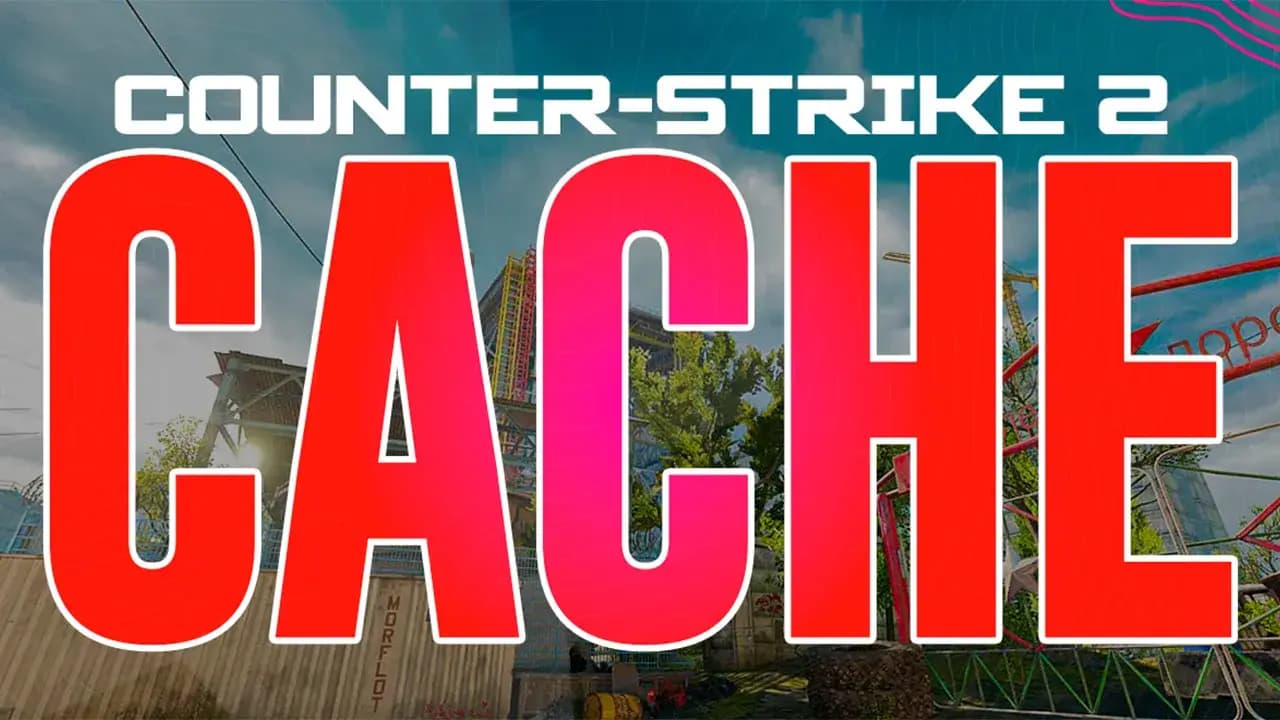
Cache in CS2 is a refreshed version of one of the most popular maps in Counter-Strike history. It is a classic bomb defusal map with three main areas of control: A site, mid, and B site. Its biggest strength has always been its clear structure, fast rotations, and the importance of controlling the middle of the map.
In CS2, Cache returned as a map rebuilt for Source 2, with new visuals, improved lighting, and a more modern look. The official update from April 28, 2026 added Cache to Competitive, Casual, Deathmatch, and Retakes. In the same update notes, Valve described the map’s return as “The Return of Cache”, while the listed modes did not yet include Premier.
From our expert perspective, Cache in CS2 is one of the best maps for learning the fundamentals of tactical Counter-Strike, because it clearly shows how important mid control, timing, utility, fast rotations, and team communication are.
Is Cache already available in CS2?
Yes, Cache is already available in CS2. The official update from April 28, 2026 added the map to Competitive, Casual, Deathmatch, and Retakes. This means players can normally play Cache in selected official modes, but it does not automatically mean a full return to the Premier pool or Active Duty tournament map pool.
Earlier, on March 3, 2025, the Cache version prepared by FMPONE and Volcano appeared in the Steam Workshop. The Workshop version had over one million subscribers, which shows how strongly the community was waiting for this map to return to CS2.
Why is Cache so important for CS2 players?
Cache is important because for years it was one of the most recognizable competitive maps in CS:GO. Many players associate it with a simple but very deep structure. It is not as maze-like as some newer maps, but it offers huge tactical possibilities.
On Cache, it is easy to understand the basic logic of Counter-Strike:
- Terrorists need to take space step by step.
- CTs need to decide when to fight for mid and when to give up space.
- Mid control opens the way to both bombsites.
- Rotations are fast, but punishable if the team reads the map incorrectly.
- Utility is extremely important when attacking A, B, and mid.
It is a map that rewards not only aim, but also strong communication and good understanding of round tempo.
What changed on Cache in CS2?
The biggest change is the visual design. Cache in CS2 is brighter, cleaner, and better adjusted to Source 2. In his rework notes, FMPONE described the goal as improving visual quality and readability, increasing strategic variety, and creating more opportunities to use utility.
In practice, players will mainly notice:
- Better model visibility.
- New lighting and more modern materials.
- A cleaner look in several locations.
- Refreshed map details.
- Some changes affecting utility.
- The classic map layout remaining intact.
Cache has not been turned into a completely new map. It is still Cache: A site, B site, mid, A main, garage, checkers, highway, vents, and fast rotations. The execution changed, but the foundation stayed familiar.
Cache in CS2 vs Cache from CS:GO
The most important difference between Cache in CS2 and Cache from CS:GO is readability and technology. Source 2 allows for better lighting, more detailed textures, and more modern effects. The map looks fresher, but it still follows familiar principles.
In CS:GO, Cache was loved for its simplicity and pace. In CS2, the same character is still there, but the visual experience feels cleaner. For old players, this means a quick return to known patterns. For new players, it is a good opportunity to learn one of Counter-Strike’s most classic maps.
HLTV described the Cache remake as a full visual refresh of the 2019 version and also noted that the map had previously been in the Active Duty pool from June 2014 to March 2019, when it was replaced by Vertigo.
The most important rule on Cache: mid control
Mid is the heart of Cache. The team that controls mid has much more freedom. Terrorists can attack A through highway, enter vents, pressure B through checkers, or force fast CT rotations. A defense that loses mid without information starts playing a guessing game.
For T side, mid gives:
- The option to split A.
- The option to split B through vents and checkers.
- Pressure on rotating CTs.
- More fake possibilities.
- Better control over round tempo.
For CT side, mid is important because:
- It helps read T intentions faster.
- It makes splits onto both bombsites harder.
- It gives information about rotations.
- It allows aggressive map control.
- It forces T side to spend utility.
My expert opinion: if you are losing on Cache, the problem very often starts in mid. A team may have good aimers, but without mid control, it will be forced to defend two bombsites without enough information.
The most important callouts on Cache in CS2
Cache callouts are relatively simple, but you need to know them well because rotations are fast and every second matters.
Most important A area callouts:
- A Main.
- A Site.
- Default.
- Quad.
- Forklift.
- Highway.
- Truck.
- CT.
- Squeaky.
- Door.
Most important mid callouts:
- Mid.
- Garage.
- Boost.
- Sandbags.
- White Box.
- Vents.
- Z / Connector.
- Highway.
- Catwalk, if your team uses that callout.
- Top Mid.
Most important B area callouts:
- B Main.
- B Site.
- Default.
- Checkers.
- Heaven.
- Headshot.
- Toxic.
- Back Site.
- Tree.
- Vents.
You do not need to know every micro-callout immediately. At the beginning, it is enough to learn A Main, B Main, Mid, Garage, Highway, Vents, Checkers, Heaven, Forklift, and CT. After that, you can add more detailed callouts.
How to play T side on Cache
On T side, the most important thing is taking space and forcing CTs to react. Cache is not a map where you should stand passively for the whole round and wait for a mistake. If you do not take mid, pressure A main, or control B main, the defense can set up comfortably.
A good T-side plan:
- Decide whether the round is based on mid control, a fast execute, or a fake.
- Use smokes to block the most dangerous angles.
- Do not give away the first kill without a trade.
- Control A main or B main, even if you do not plan to enter immediately.
- Use flashes for the players going out first.
- After taking mid, make a decision quickly.
- Do not let CTs flank for free.
- After planting the bomb, play crossfires instead of taking solo peeks.
The most common T-side mistake on Cache is having no plan after taking the first part of the map. The team takes mid, then stands still, loses utility, and allows CTs to return to comfortable positions.
The simplest T-side plan: mid control
Mid control is the most universal way to play Cache. You do not always need to finish the round through mid, but taking it alone forces CTs into uncomfortable decisions.
Round structure:
- One or two players control B main or A main.
- Two players work on mid.
- One player watches the flank or supports with utility.
- After taking mid, the team decides: A split, B split, or tempo reset.
- The execute begins only when players are ready to trade.
The most important thing is that mid should not be a lonely duel without support. The player going into mid should have a flash, a smoke, or someone ready to trade the kill.
How to attack A site on Cache
A site on Cache can be attacked directly through A main and Squeaky, or through a mid split from Highway. A simple A main push can be difficult if CTs have a strong crossfire from Forklift, Quad, site, and Truck. That is why an A execute should be prepared with utility.
Practical A attack plan:
- Take A main.
- Check for CT aggression.
- Throw a smoke for CT or Truck.
- Use a flash over the site.
- Send a player out of Squeaky or Highway if you plan a split.
- The first player clears Forklift and close positions.
- The second player checks Quad and site.
- After planting, set up a crossfire from A main, site, and Highway.
The most important positions to check when entering A are Forklift, Quad, Default, close site, Truck, and Highway. If you do not clear them, you can win the entry but quickly lose the post-plant.
How to attack B site on Cache
B site is more closed and often requires stronger utility usage. The key areas are B main, Checkers, Heaven, Headshot, and back site. Entering only through B main without control of Checkers can be very risky, because CTs have many crossfire positions.
Practical B attack plan:
- Take B main.
- Check close positions.
- Take Checkers or block it with utility.
- Use a smoke for Heaven or CT.
- Flash over site before entering.
- Clear Headshot, Default, Back Site, and Toxic.
- Do not plant the bomb without control of nearby angles.
- After planting, play from B main, site, and Checkers.
A B split through mid and vents is often stronger than a simple B main rush. If CTs need to look at B main and Checkers at the same time, the defense becomes much harder.
How to play CT side on Cache
On CT side, the most important thing is combining information with reasonable risk. Cache gives defenders many opportunities for aggression, but pushing too often can quickly destroy your economy. A good defense is based on controlling key areas and rotating quickly.
A good CT-side plan:
- Decide whether you fight for mid or give it up temporarily.
- Do not defend both bombsites without information.
- Use delay utility to slow T executes.
- Change your setups between rounds.
- Play crossfires on bombsites.
- Do not rotate too early after hearing only utility.
- Watch vents and highway.
- After losing mid, play more defensively.
The biggest CT mistake is taking solo duels without a trade. Cache punishes those decisions because T side can quickly use the player advantage and enter a site.
How to defend A site on Cache
A site requires a good split of responsibilities. One player can control A main, while another supports from site, Forklift, Quad, or Highway. If CTs give up A main without information, they need delay utility ready.
Good A defense rules:
- Do not peek A main the same way every round.
- Use a molotov or smoke to slow fast executes.
- Play positions that allow you to fall back.
- If mid is lost, watch out for Highway.
- Communicate if you hear Squeaky.
- Do not fight several players at once without support.
- After contact, try to stay alive as long as possible.
- Give rotating teammates time.
A site on Cache is often won not by the CT who gets the first kill, but by the one who delays the execute and gives accurate information.
How to defend B site on Cache
B site is difficult if T side uses flashes and smokes well. The B defender needs to know how to play for time. Sometimes the most important thing is not killing two enemies, but surviving, burning time, and allowing rotations.
Good B defense rules:
- Control B main early in the round.
- Watch out for fast executes.
- Use molotovs and smokes to delay.
- Have a plan for Checkers.
- Do not give up Heaven without information.
- Play a crossfire with the second B player if you have two on B.
- After losing the site, do not retake alone.
- Wait for utility and team support.
On B site, it is especially important to recognize whether T side is really committing or only forcing rotations. One smoke and a few footsteps do not always mean a full attack.
The most important grenades on Cache in CS2
Cache is a map where utility matters a lot. Without grenades, site executes and mid control become much harder. You do not need to know 30 lineups immediately, but a few basic smokes and flashes make a huge difference.
Most important types of grenades:
- Smoke for CT when attacking A.
- Smoke blocking Highway.
- Smoke for Heaven when attacking B.
- Smoke or molotov for Checkers.
- Smoke for mid control.
- Flash over A site.
- Flash for the B main exit.
- Molotov for Forklift or Quad.
- Molotov for Headshot / back site.
- HE grenade for fast pushes through B main or A main.
From our expert perspective, on Cache it is better to know fewer grenades but use them with a clear purpose every time. A random smoke often helps the opponent. A good smoke blocks a rotation, isolates a position, or allows a safer execute.
How to practice Cache in CS2
The best Cache practice should include several stages. Playing deathmatch on the map alone is not enough, because it teaches duels but not timing, utility, and rotations.
Training plan:
- Walk through the map offline and name the most important positions.
- Learn the basic callouts.
- Play a few deathmatches on Cache.
- Practice A and B executes without opponents.
- Learn 3-5 basic smokes.
- Play Retakes to understand post-plants.
- Watch your own rounds and check where you die most often.
- Change only one thing at a time: position, timing, or utility.
For a beginner, the goal is not perfect tactics right away. First, you need to know the map well enough that you do not have to think about where you are going or where the enemy can come from.
Most common mistakes on Cache
Cache looks simple, and that is exactly why many players play it too automatically. The most common mistakes come from poor map control, weak communication, and overly fast rotations.
Most common T-side mistakes:
- Not fighting for mid.
- Rushing without flashes.
- Attacking A without clearing Forklift and Quad.
- Attacking B without Checkers control.
- No trade frags.
- Too late of a decision after taking mid.
- Too passive post-plant.
- No player watching the flank.
Most common CT-side mistakes:
- Giving up mid without a plan.
- Rotating too quickly.
- Repeating the same aggression.
- Taking solo peeks.
- Not using delay utility.
- Playing too deep on the bombsite with no escape.
- No communication about vents and highway.
- Retaking without waiting for teammates.
Is Cache a good map for beginners?
Yes, Cache is a very good map for beginners, but under one condition: the player needs to learn basic callouts and the logic of mid control. The layout is clear, rotations are easy to understand, and the bombsites are not overly complicated. This makes Cache a great map for learning CS2 fundamentals.
Beginners on Cache should focus on:
- Knowing callouts.
- Holding simple angles.
- Not peeking without a flash.
- Using smokes to block positions.
- Playing with the team.
- Listening to footsteps and calls.
- Learning mid timings.
- Staying alive after contact instead of forcing hero plays.
Cache is easy to start playing, but difficult to fully master. That is a very good quality for a competitive map.
Will Cache return to Premier and Active Duty?
For now, the safest statement is that Cache has returned to selected official CS2 modes, but its full status in Premier and the Active Duty map pool depends on Valve’s decisions. The April 28, 2026 update listed Competitive, Casual, Deathmatch, and Retakes, while the blog wording suggested a gradual return of the map.
Will Cache enter Premier? It is very possible because the map has huge historical importance and strong community support. However, it should not be presented as certain until Valve officially confirms a map pool change.
Cache, skins, and collections
Cache has always been strongly associated with the atmosphere of Chernobyl, radiation, and an industrial style. The Workshop version of the map was described as a bomb defusal map set around Chernobyl, where terrorists are trying to destroy evidence connected to a weapons cache.
For players interested in skins, the return of Cache may have additional meaning. Every return of a cult map increases interest in items connected to its atmosphere, collections, stickers, and skins that fit the theme. This does not automatically mean price increases, but it shows that the map matters not only for gameplay, but also for collectors.
Expert opinion: why is Cache worth playing in CS2?
Cache is worth playing because it is one of the best maps for learning the real tempo of Counter-Strike. It does not forgive lack of mid control, weak communication, and chaotic rotations. At the same time, it does not overwhelm new players with too many complicated paths. Everything is fairly clear: if you have mid, you have options. If you give up mid, you need a defensive plan.
From our expert perspective, Cache in CS2 can become one of the most important maps for players who want to improve their tactical thinking. This is not only a map for aimers. Good aim helps, but the team that controls space, uses utility, and makes fast decisions after first contact wins the most.
The biggest strength of Cache is that simple principles create a lot of depth. You can play fast executes, slow rounds, mid splits, fakes, CT aggression, retakes, and strong post-plants. Because of that, the map is easy to start playing, but takes a long time to truly learn.
Summary
Cache in CS2 marks the return of one of Counter-Strike’s most iconic maps. It officially returned in the April 28, 2026 update to Competitive, Casual, Deathmatch, and Retakes. The map keeps its classic layout, but has been visually refreshed for Source 2, with better readability, new lighting, and a more modern look.
The most important element of playing Cache remains mid control. It determines whether T side can split A or B, and whether CTs have enough information to rotate correctly. Players who want to play Cache well should learn callouts, basic smokes, timings, and retake principles.
Cache is good for beginners, useful for advanced players, and highly valuable for practice. It is a map that rewards classic CS2 fundamentals: aim, utility, trade frags, communication, and decisions made at the right moment.
FAQ
Is Cache in CS2?
Yes. Cache was added to CS2 in the April 28, 2026 update and is available in Competitive, Casual, Deathmatch, and Retakes.
Is Cache in Premier Mode?
The update that added Cache listed Competitive, Casual, Deathmatch, and Retakes. Premier was not included on that list, so a full return to Premier should not be assumed without separate confirmation from Valve.
Who created Cache?
Cache is mainly associated with FMPONE and Volcano. The CS2 Workshop version was published by FMPONE and Volcano on March 3, 2025.
Is Cache in CS2 different from the CS:GO version?
Yes. Cache in CS2 has refreshed visuals, new lighting, and better readability, but it keeps the classic structure of the map: A site, B site, mid, highway, vents, and fast rotations.
What is the most important thing on Cache?
The most important thing is mid control. Mid opens an A split through Highway, a B split through Vents and Checkers, and gives the team more information about rotations.
Is Cache a good map for beginners?
Yes. Cache has a clear layout and teaches CS2 fundamentals well, but beginners should learn callouts and the principles of mid control as quickly as possible.
How should you practice Cache?
The best way is to combine offline practice, callout learning, basic smokes, deathmatch, retakes, and analysis of your own rounds. Deathmatch alone is not enough if you want to understand the map properly.
Can Cache return to the tournament map pool?
It can, but that depends on Valve’s decision. The return to official modes is an important step, but a full return to Premier or Active Duty requires separate confirmation.

I am a veteran player with over 20 years of experience, having been part of the Counter-Strike community since the early days of 1.6. As an expert in virtual economy and gameplay mechanics, I help you reach the next level by creating technical guides and tactical breakdowns, while providing data-driven insights into the CS2 skin market and sticker investments.